
Comment créer et gérer une plantation de tabac
- Prix habituel
- €950,00 EUR
- Prix habituel
-
- Prix soldé
- €950,00 EUR
- Prix unitaire
- par
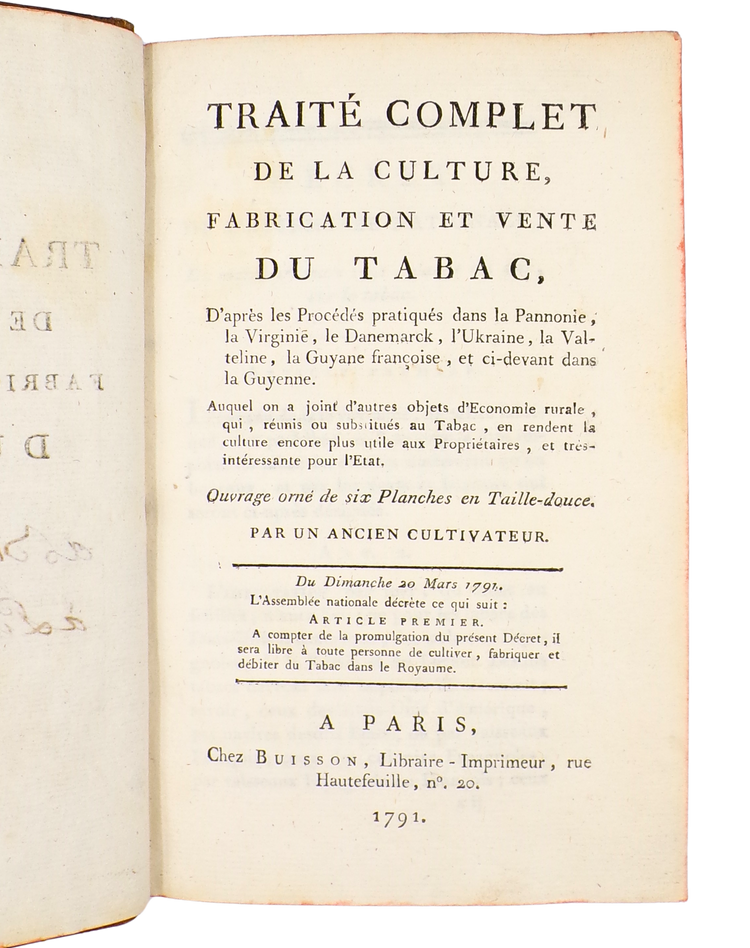
[Louis, comte de Villeneuve (1768-1851)].
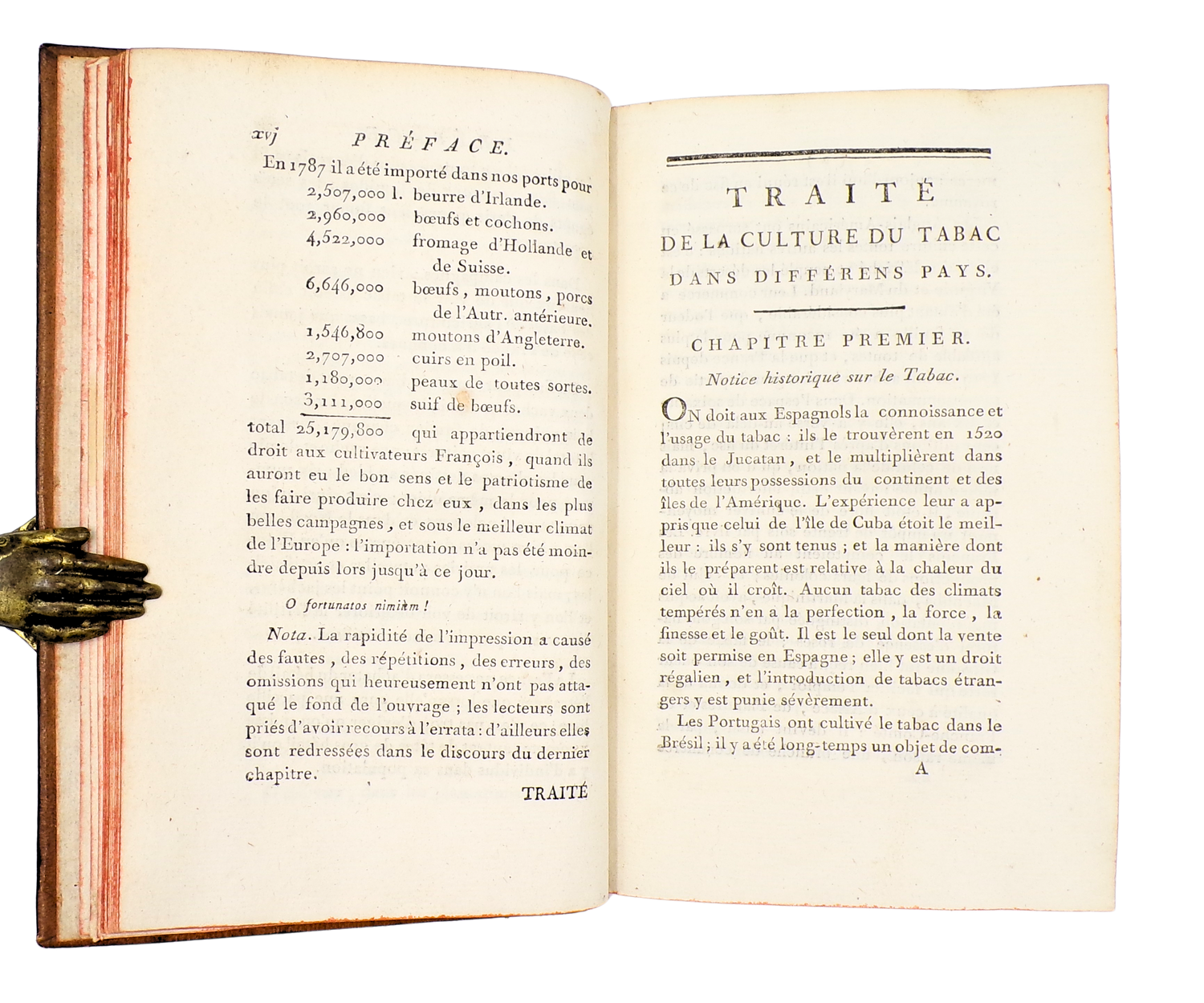
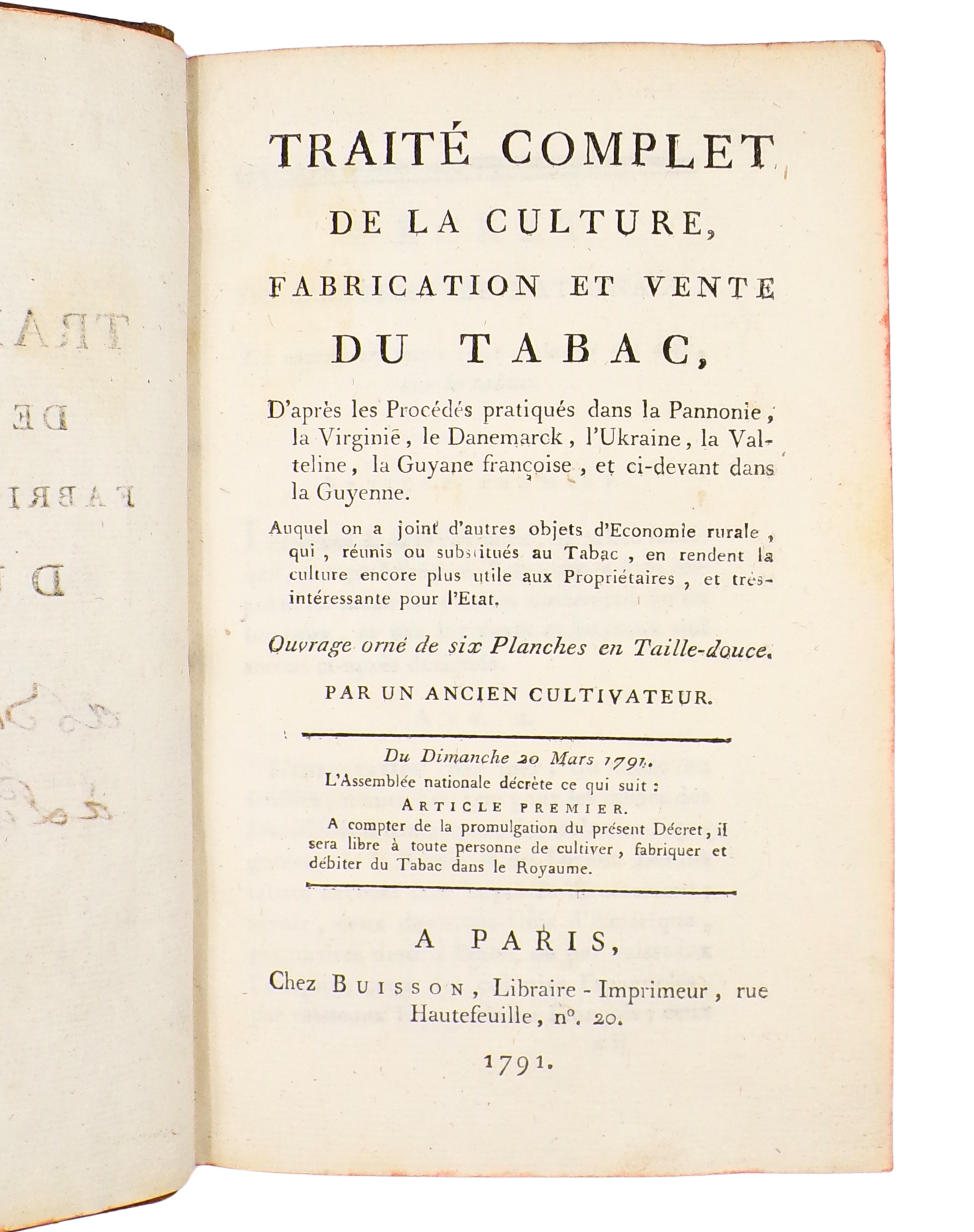
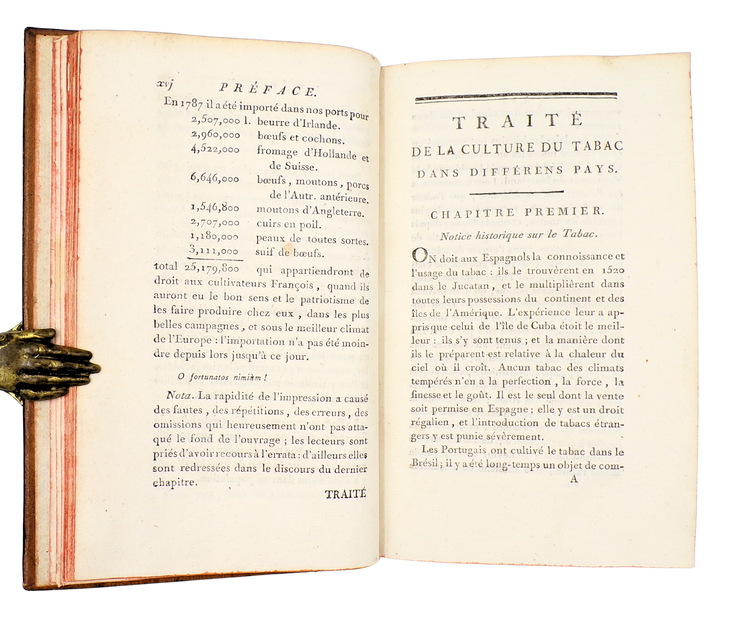
Traité complet de la culture, fabrication et vente du tabac, d'après les procédés pratiqués dans la Pannonie, la Virginie, le Danemarck, l'Ukraine, la Valteline, la Guyane françoise, et ci-devant dans la Guyenne. Auquel on a joint d'autres objets d'economie rurale, qui, réunis ou substitués au tabac, en rendent la culture encore plus utile aux propriétaires, et tres intéressante pour l'etat. Ouvrage orné de six planches en taille-douce.
Paris, Chez Buisson, libraire-imprimeur, rue Hautefeuille, no. 20, 1791.
viii, xvi, 256, 257, [1], 257-456 pages, [2] pp., With 6 folding plates.
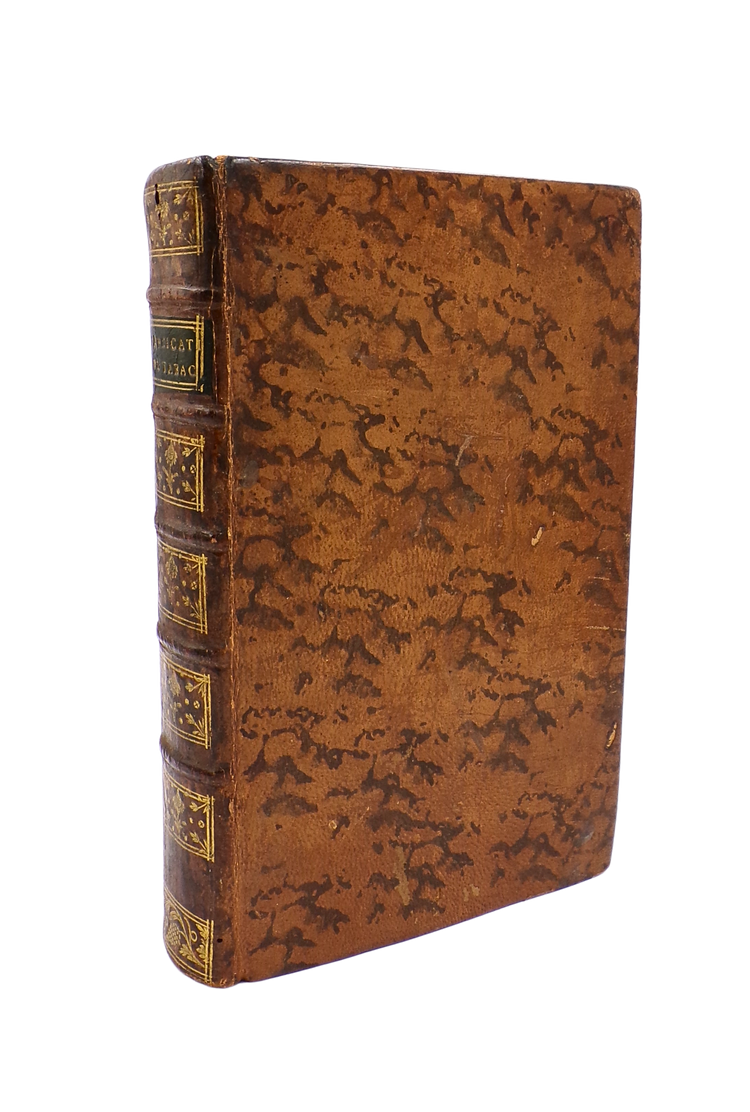
Contemporary mottled calf with gold-tooled spine and red edges.
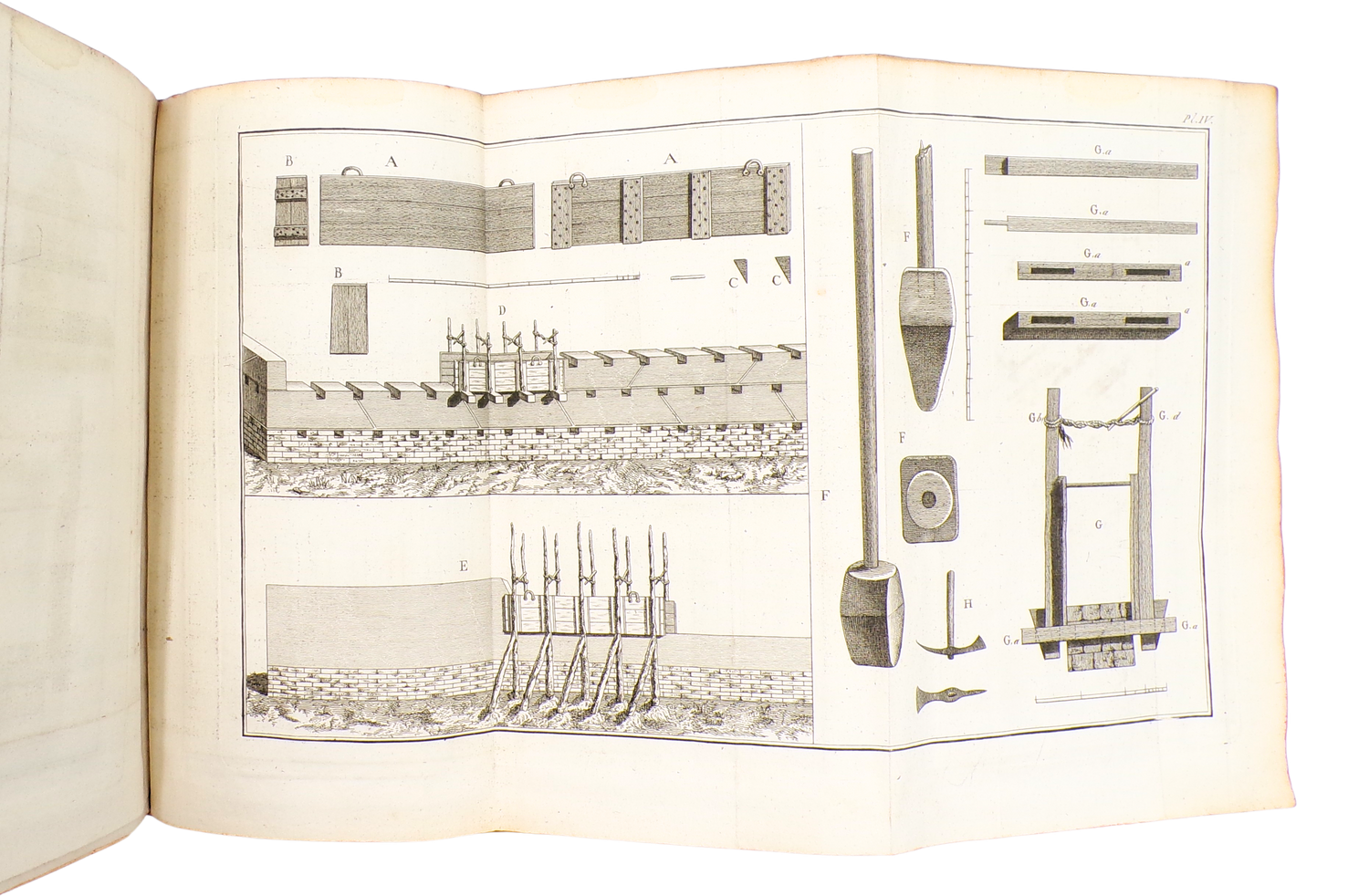
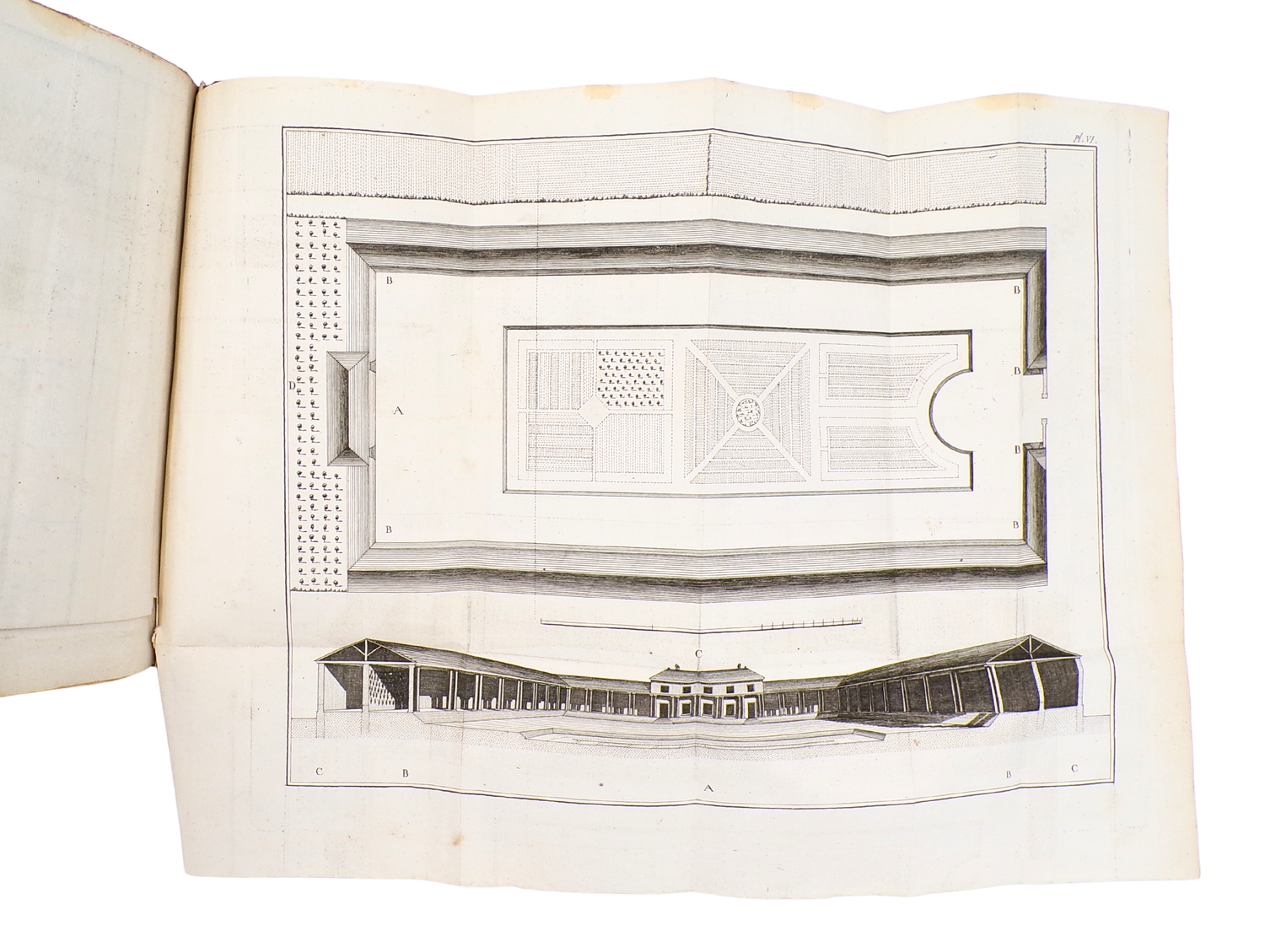
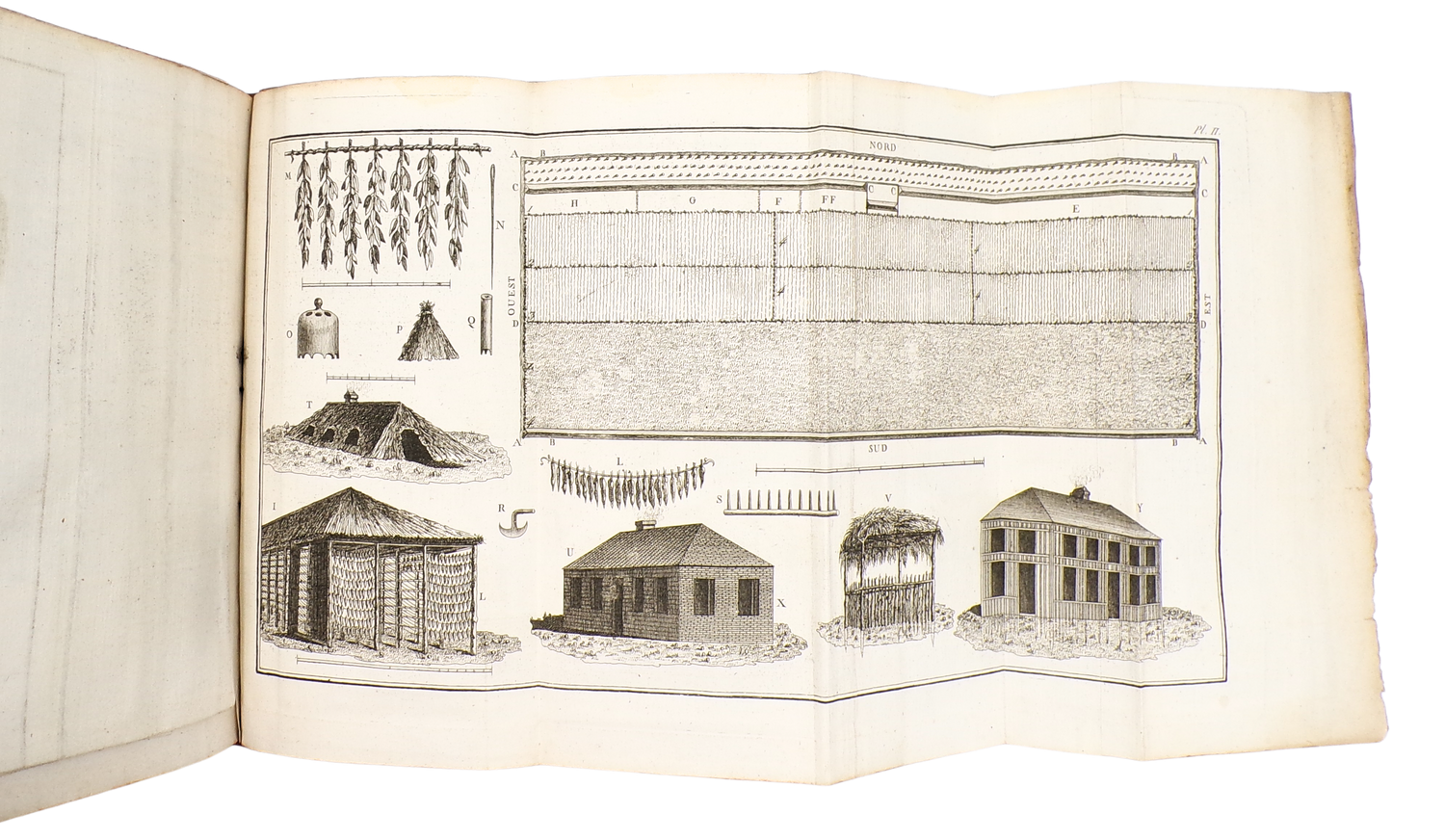
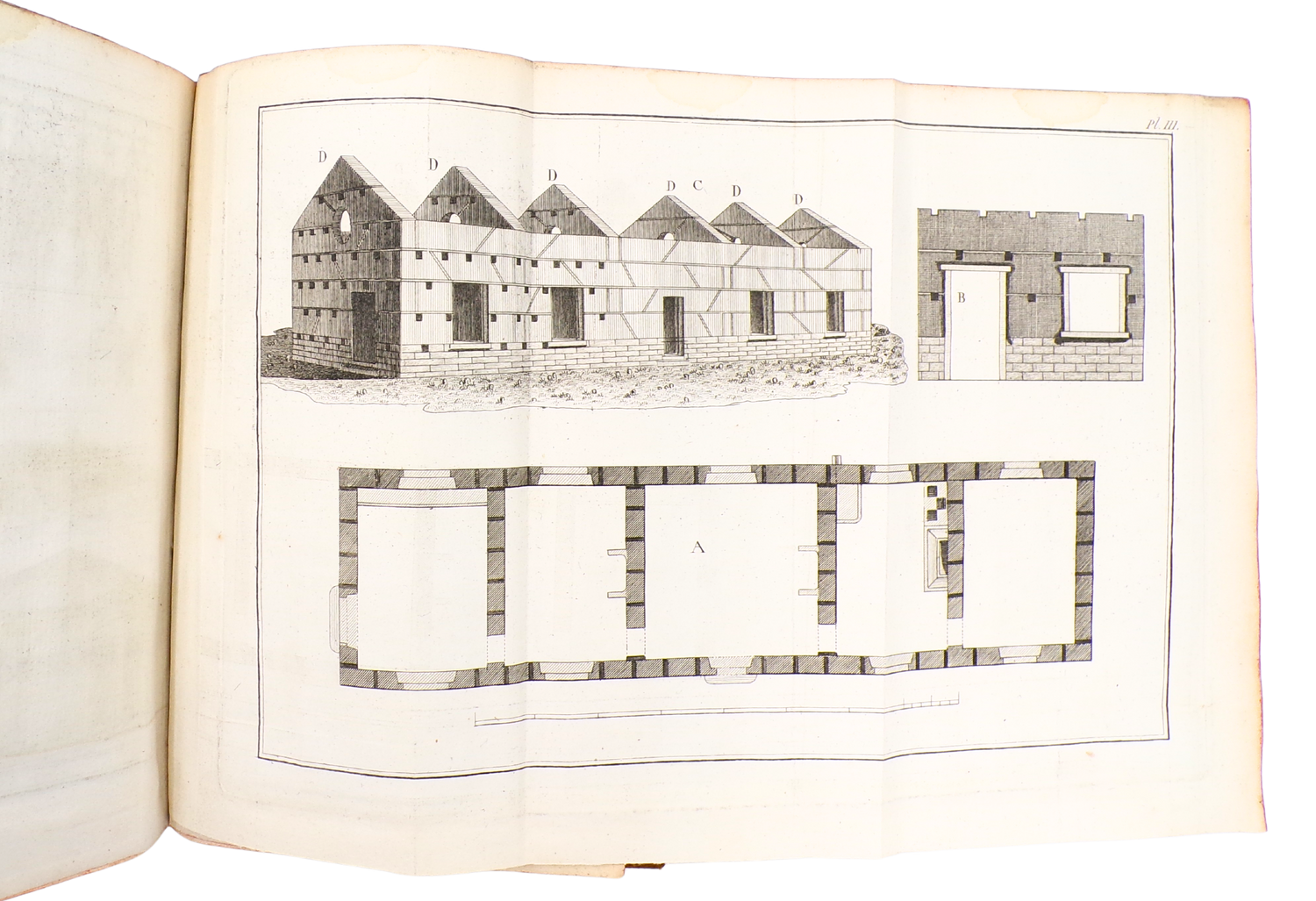
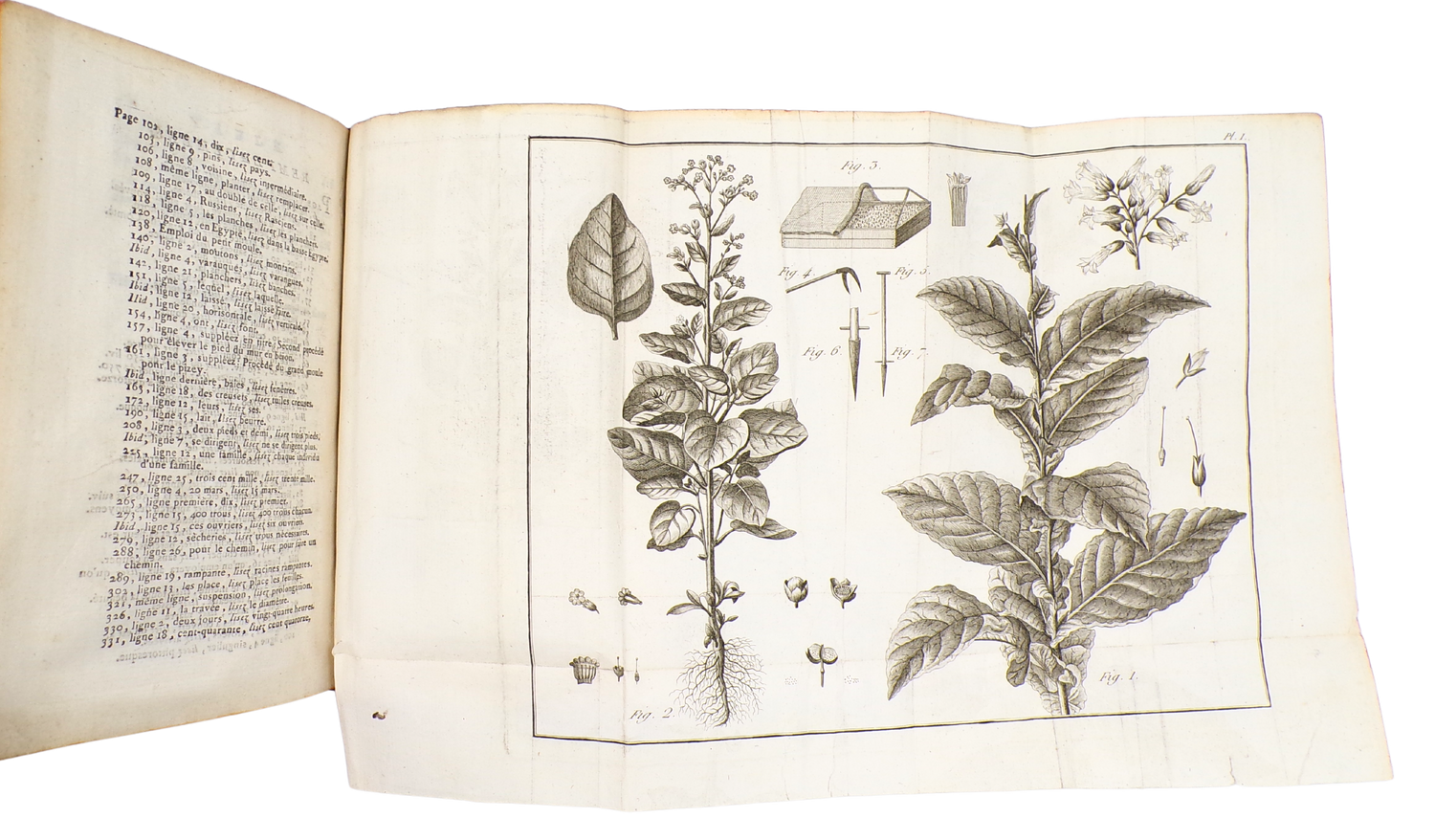
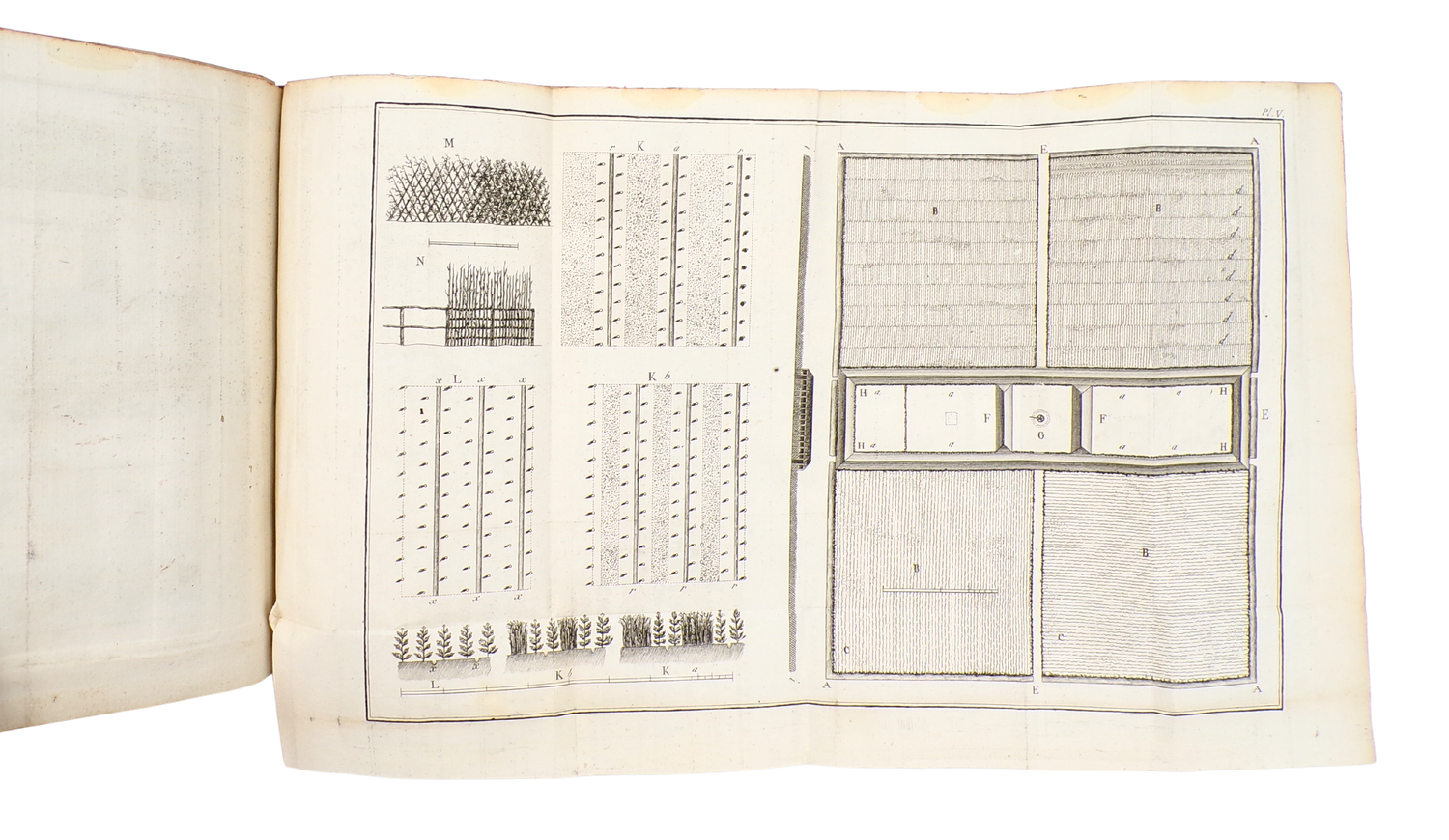
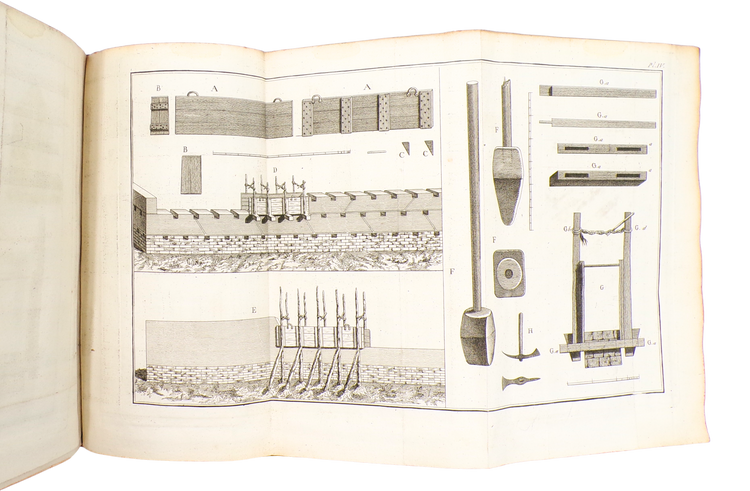
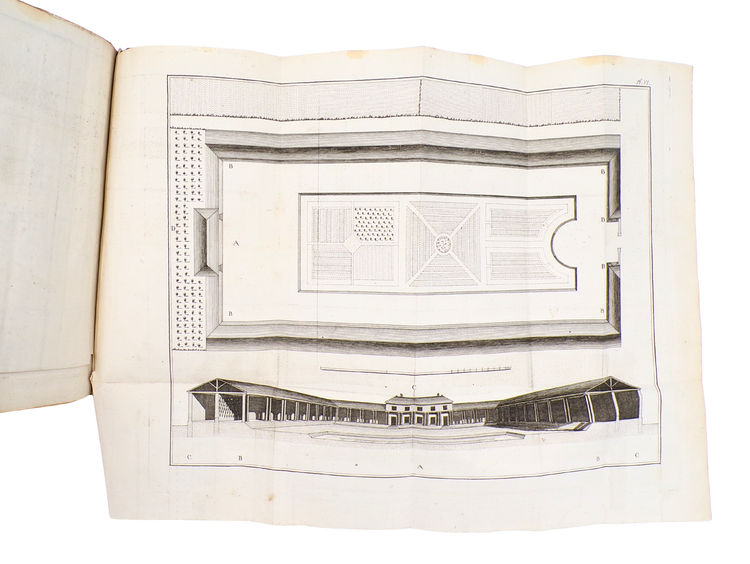
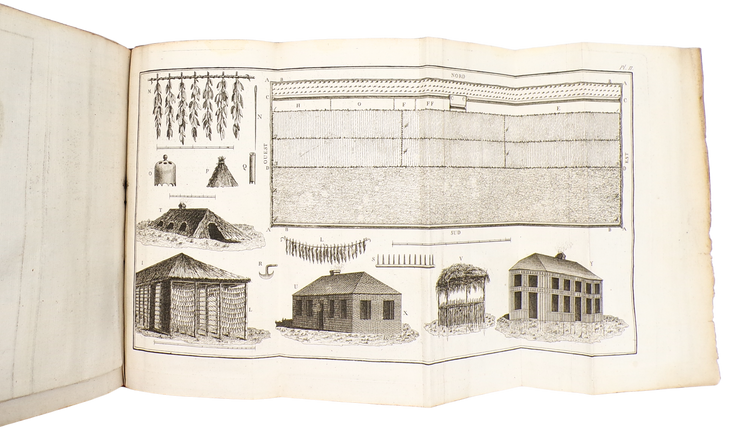
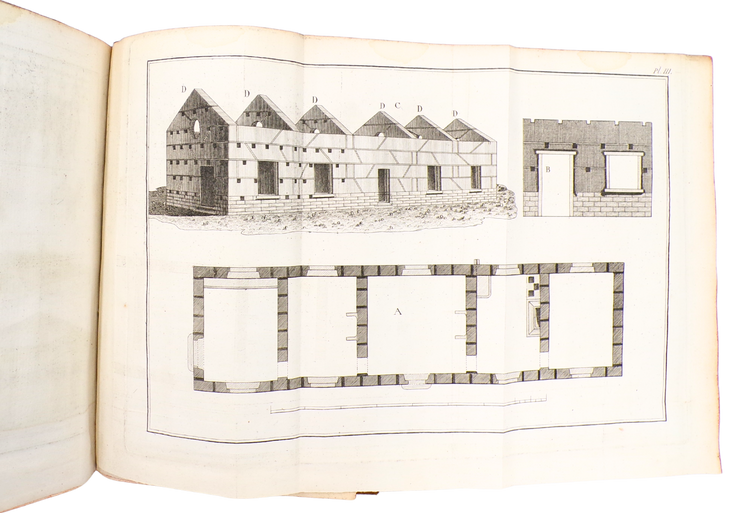
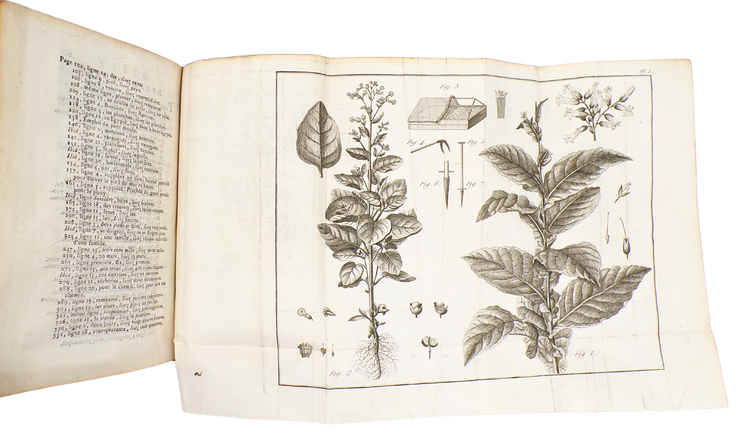
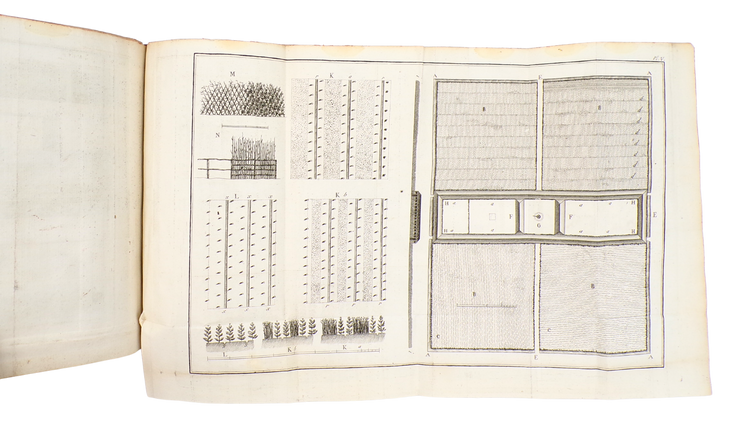
Published in response to the abolition of France’s state tobacco monopoly in 1791, this work provides an exhaustive study of tobacco cultivation across Europe and the Americas. It details every stage of production—from soil preparation and harvesting to processing and sale—offering landowners practical guidance in a newly deregulated market. The six large folding plates illustrate key aspects of plantation work, including drying houses, machinery, and field labor.
Beyond its technical and economic focus, this work inevitably intersects with the history of slavery, as tobacco plantations in the Americas—especially in Virginia and French Guiana—were deeply reliant on enslaved labor. Its descriptions of large-scale plantations in colonial territories indirectly document the forced labor conditions under which much of the world’s tobacco was cultivated. The author's pragmatic approach to labor management and cost calculations, without acknowledging the human suffering involved, reflects the mercantile mindset of the time.
Condition: minor wear to binding, half title inscribed: “Bigotte notaire public à Punerot”, stain in quire C, spotting in quire P, Z4-Z5 loose. Otherwise in very good condition.
Reference:
Arents, G. Tobacco, IV:1107; Goldsmiths'-Kress no. 14672.16; Pritzel 11704.
Impossible de charger la disponibilité du service de retrait
Partager
Contact
E-mail : hugo@artemrarebooks.com
Téléphone : +31651042297
Visites sur rendez-vous
Ancienne ambassade des États-Unis
Lange Voorhout 102
2514EJ
La Haye (Pays-Bas)
Adresse d’expédition
Nannie van Wehlstraat 51
2548MN
La Haye
Pays-Bas